


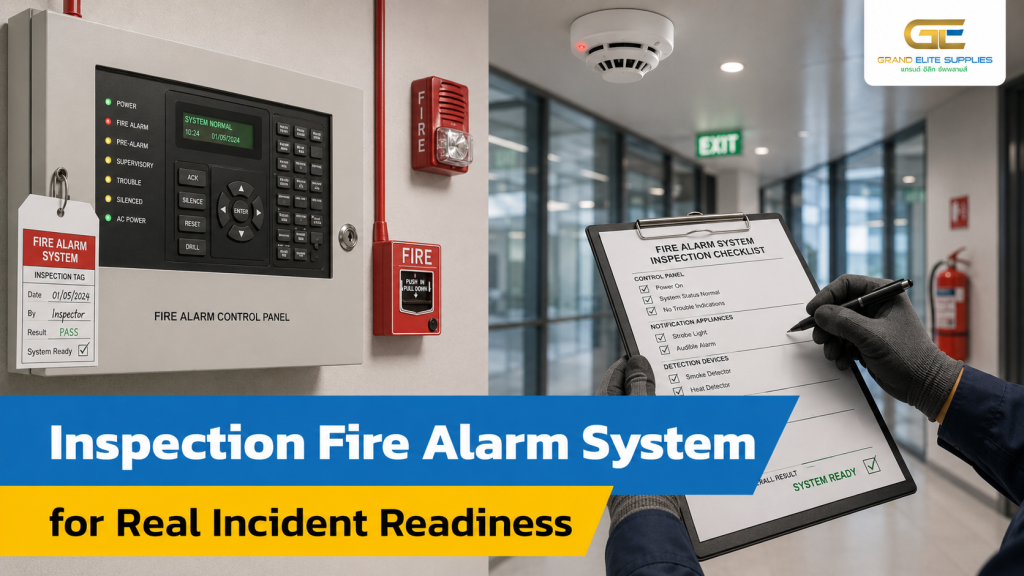
A fire alarm system inspection should confirm that the entire alarm process is ready for an emergency, not just that individual devices still function. It reviews detectors, Manual Stations, signal paths, Fire Alarm Control Panel status, notification devices, backup power, and records that support maintenance planning.
Smoke or heat may begin in areas where occupants do not notice it immediately. A proper inspection follows the system from detection and activation through panel response and notification output, helping facility teams identify issues, prioritize repairs, and maintain reliable system performance.
How a Fire Alarm System Should Respond During an Actual Event
When smoke or heat occurs, the fire alarm system should begin with the Detector identifying the incident and sending a signal to the Fire Alarm Control Panel to show the related zone and location. The system should then activate notification devices such as the Alarm Bell, so people in the building can recognize the alarm and facility staff can start checking the affected area quickly.
Alarm Bells, sounders, strobes, speakers, or other notification devices then activate according to the system design and site requirements. The inspection process should review this sequence against local requirements, AHJ guidance, manufacturer instructions, and applicable standards such as NFPA 72, where relevant. Inspection scope and frequency can vary depending on the building and system type.
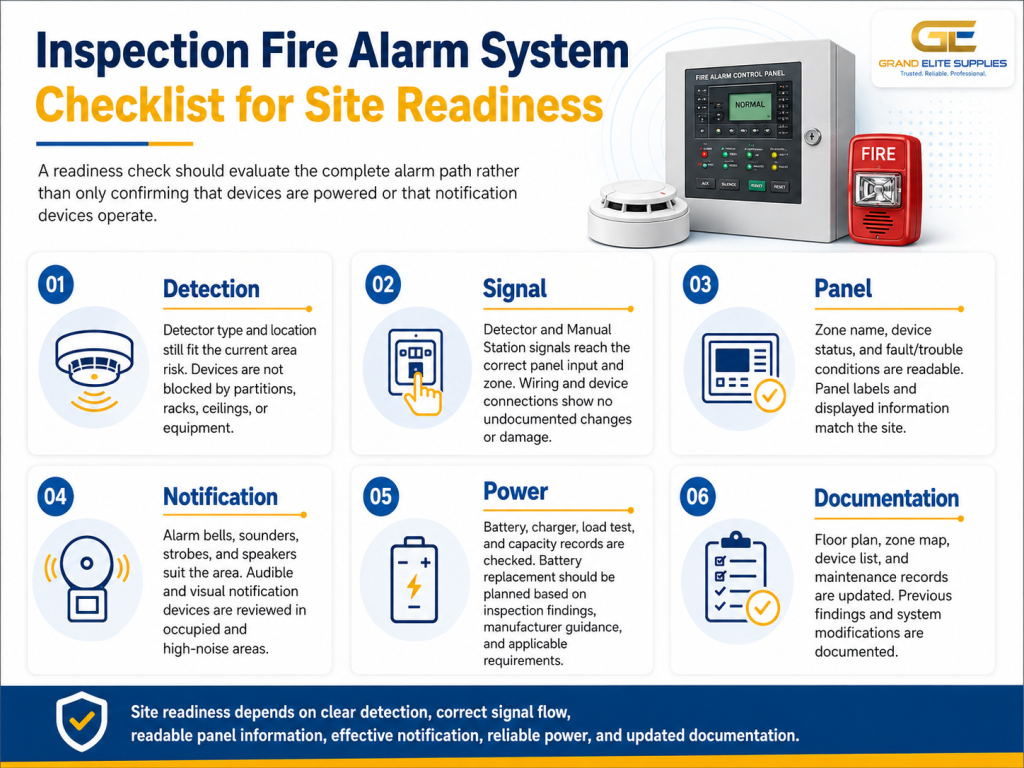
Inspection Fire Alarm System Checklist for Site Readiness
A readiness check should evaluate the complete alarm path rather than only confirming that devices are powered or that notification devices operate.
| Inspection Area | What Should Be Checked |
| Detection | Detector type and location still fit the current area risk. Devices are not blocked by partitions, racks, ceilings, or equipment. |
| Signal | Detector and Manual Station signals reach the correct panel input and zone. Wiring and device connections show no undocumented changes or damage. |
| Panel | Zone name, device status, and fault/trouble conditions are readable. Panel labels and displayed information match the site. |
| Notification | Alarm Bells, sounders, strobes, and speakers suit the area. Audible and visual notification devices are reviewed in occupied and high-noise areas. |
| Power | Battery, charger, load test, and capacity records are checked. Battery replacement should be planned based on inspection findings, manufacturer guidance, and applicable requirements. |
| Documentation | Floor plan, zone map, device list, and maintenance records are updated. Previous findings and system modifications are documented. |
Are Detectors, Manual Stations, and Zones Still Matched to the Current Layout?
Building conditions often change after installation. New partitions, ceiling modifications, warehouse racks, relocated machines, tenant changes, and room repurposing can affect detector coverage, Manual Station access, and zone accuracy.
Automatic detectors are not always the first alarm input. In some situations, a person may identify the incident first and activate a Manual Station. During inspection, detector locations, Manual Stations, zone labels, and area names should be compared with actual site conditions. If panel information no longer matches the physical location, staff may be directed to the wrong area during an alarm.
Can the Fire Alarm Control Panel Show Clear and Correct Information?
During an alarm, fault, or trouble condition, staff rely on the Fire Alarm Control Panel to determine where to respond first. The panel should clearly display alarm status, device status, zone information, area labels, and fault/trouble conditions.
The inspection should verify that panel labels, display messages, and zone descriptions match the updated floor plan and building use. Outdated zone names or area labels can create confusion, especially in larger facilities. Repeated fault or trouble conditions should be recorded and investigated rather than treated as normal operating conditions.
Do Notification Devices Cover Occupied and High-Risk Areas?
Notification devices should be reviewed based on how the building is currently used. Alarm Bells, sounders, strobes, speakers, or other notification devices may be suitable for different environments depending on noise levels, visibility, occupancy, and operational requirements.
Machine rooms, warehouses, plant rooms, service corridors, and other high-noise areas should not rely on audible notification alone without review. Audible and visual notification devices should be assessed against site conditions and applicable requirements to determine whether occupants can recognize and respond to an alarm signal effectively.
What Inspection Findings Should Help Building Owners Decide?
Inspection findings should help owners and facility managers prioritize repair, replacement, investigation, and maintenance actions.
| Inspection Finding | What It Means | Recommended Action |
| Detector is working, but the area layout has changed | Smoke or heat may not reach the device as originally intended | Review detector location based on current room use |
| Manual Station is blocked or difficult to access | Alarm activation may be delayed | Improve access, visibility, or review relocation |
| Panel zone name is outdated | Staff may investigate the wrong area | Update panel labels, zone map, and floor plan |
| Alarm Bell or notification device is weak in some areas | Occupants may not recognize the alarm clearly | Review audible and visual notification coverage |
| Repeated fault/trouble status appears | Device, wiring, or configuration issues may remain unresolved | Investigate the cause and document corrective action |
| Backup battery records are unclear | Backup power reliability cannot be verified | Review battery condition, charger status, load tests, and capacity records |
Typical deliverables include an inspection report, defect list, photos, zone findings, a priority repair list, and recommended actions. These records help building owners establish repair and maintenance priorities based on documented findings.
Grand Elite Supplies Supports Inspection, Repair, and Fire Alarm Maintenance
Grand Elite Supplies provides Fire Alarm System inspection, installation, repair, equipment sales, fire alarm maintenance, system modification, and technical recommendations based on actual site conditions. Services can cover Fire Alarm Control Panels, Smoke Detectors, Heat Detectors, Manual Stations, Alarm Bells, sounders, strobes, speakers, signal wiring, backup power systems, zone information, and related documentation.
Inspection findings can support maintenance planning, identify risks, and guide owners on what to repair or improve first. Building owners can contact Grand Elite Supplies to review existing fire alarm system conditions and plan the next inspection, repair, or maintenance action.
Frequently Asked Questions About Fire Alarm Inspections
How often should a fire alarm system inspection be done?
Inspection frequency depends on local requirements, AHJ guidance, manufacturer instructions, building risk, system type, and applicable standards. Additional inspections may also be appropriate after renovations, system modifications, recurring fault conditions, or significant changes to building use.
If the Alarm Bell still rings, does it mean the whole system works properly?
No. A ringing Alarm Bell only confirms that part of the notification path is operating. A complete inspection should also review detector inputs, Manual Stations, signal transmission, panel information, zone accuracy, fault/trouble conditions, backup power, and related documentation.
What should be included in an inspection report?
An inspection report should include checked devices and locations, panel findings, zone information, defect lists, photos, fault/trouble records, backup power findings, repair priorities, and recommended actions. These details support maintenance planning and corrective action decisions.
When should a building request another inspection after renovation or layout changes?
A new inspection should be considered when partitions, ceilings, equipment, storage racks, room use, area names, or alarm device locations change. These updates can affect detector coverage, notification effectiveness, and zone information accuracy.
